
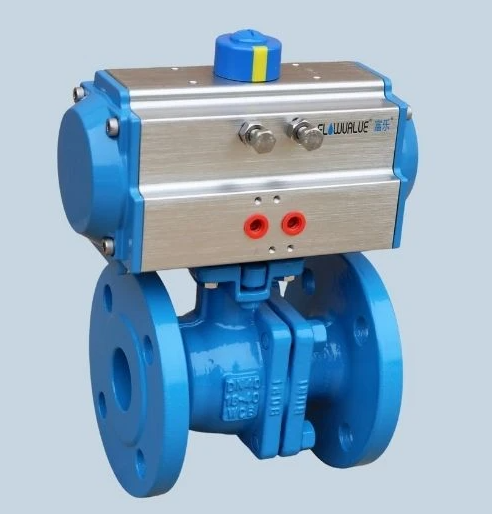

Sản phẩm demo Van2
- Product Name: Floating Ball Valve WCB Class 150
- Body Material: ASTM A216 WCB (Carbon Steel)
- Ball Material: Stainless Steel SS304 / SS316
- Seat Material: PTFE / RPTFE (optional PEEK for high-temp service)
- Stem Material: SS420 / SS304 with anti-blowout design
- Pressure Rating: ASME Class 150 (19.6 bar @ 38°C)
- Temperature Range: -29°C to +200°C
- Connection Type: Flanged RF / FF per ASME B16.5
- Face-to-Face Standard: ASME B16.10
- Test Standard: API 598 / ISO 5208
- Operation Type: Lever handle or gear operator, optional actuator (pneumatic/electric)
What is a Floating Ball Valve?
A floating ball valve is a quarter-turn valve that uses a floating ball to control fluid flow. The ball is not fixed to the stem but is held in place by two valve seats. When the handle turns, the ball rotates to either block or allow the flow through the pipeline.
The “floating” nature allows the ball to move slightly downstream under pressure, pressing tightly against the seat to ensure an effective seal — this is the key reason why floating ball valves are known for excellent shut-off performance.
Why CLASS 150 Matters in Industrial Piping Systems
In industrial terminology, CLASS 150 refers to a pressure rating defined by ASME B16.5 standards. It does not mean the valve can only handle 150 psi. Instead, the actual working pressure depends on material and temperature.
For carbon steel WCB, the maximum pressure at ambient temperature is about 19.6 bar (285 psi).
CLASS 150 is commonly used in low-to-medium pressure applications, making it ideal for water, oil, gas, and general process industries.
Understanding the WCB Material
What Does WCB Stand For?
WCB stands for “Wrought Carbon Steel Grade B”, defined under ASTM A216. It’s a carbon steel used for pressure-containing parts that require high strength and toughness.
Mechanical Properties of WCB Steel
WCB offers excellent tensile strength (485–655 MPa) and good ductility, which helps it resist cracking under thermal or mechanical stress. It performs well in both ambient and moderately high temperatures.
Why WCB is Popular for Ball Valves
-
Strong and cost-effective for industrial environments
-
Suitable for a wide range of fluids, including water, oil, and steam
-
Can be used with various coatings or linings for enhanced corrosion resistance
Đánh giá
Chưa có đánh giá nào.